

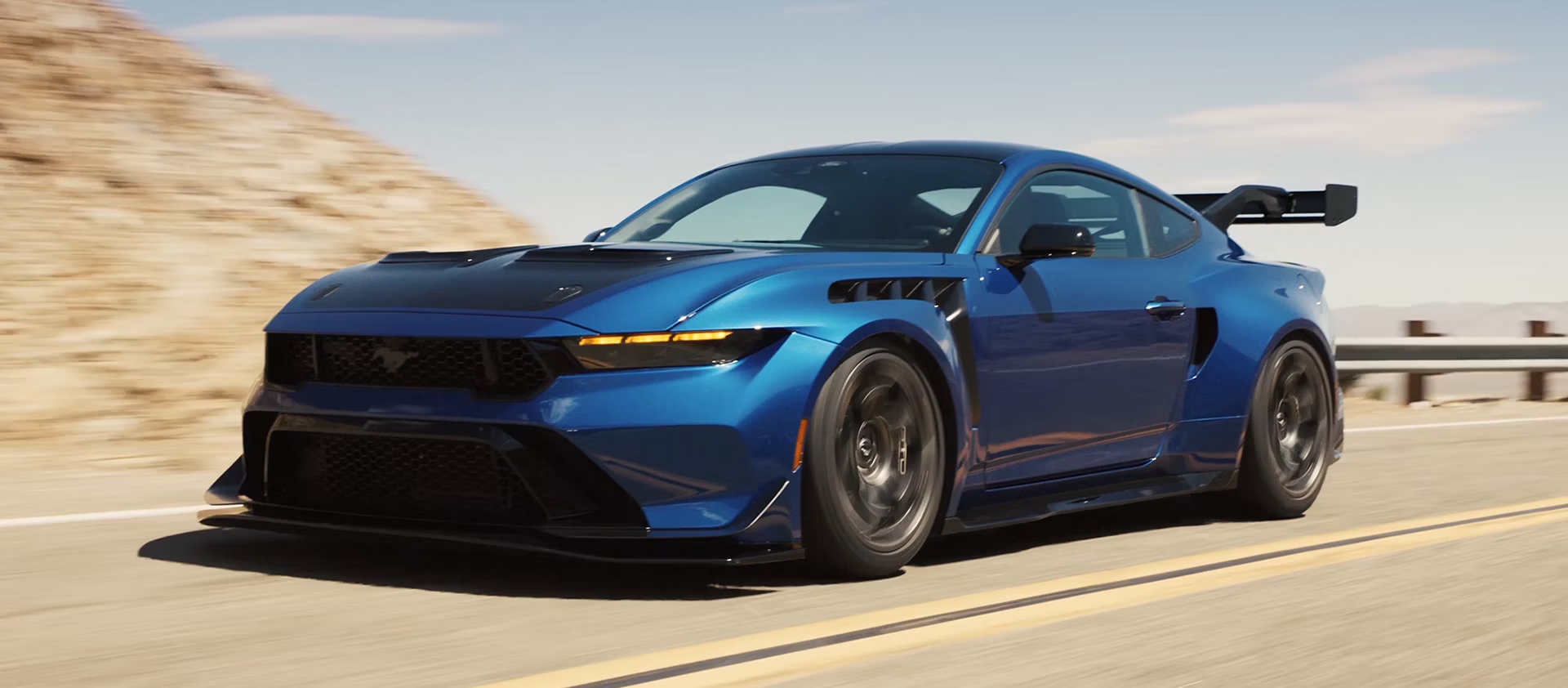
The ford mustang gtd is not a Mustang you buy for the commute. It is the direct result of Ford’s GT3 racing program—a machine engineered to lap tracks and then legally drive home afterward. With a supercharged 5.2-liter V8, active aerodynamics borrowed from motorsport, and a massive price tag, the GTD represents the absolute limit of what Ford is willing to put on a public road.
The quick answer: The Mustang GTD starts at around $300,000, produces 800+ horsepower, and goes from 0-60 mph in under 3.5 seconds. It is a limited-production, track-focused super pony car – not a standard Mustang trim level.
Born from the Racetrack
Ford did not simply turn up the power on a Shelby and call it a day. The GTD’s development was intertwined with Ford’s GT3 racing program, which demanded real aerodynamic downforce, real suspension travel, and real braking performance. The road car carries over the carbon fiber body panels, rear active wing, and underbody diffuser directly from that racing philosophy.
This is not a car that wears racing stripes as marketing. It is a car that had to be approved for road use after being designed to win races. That distinction matters enormously.
Performance Specifications
|
Specification |
Figures |
|---|---|
|
Engine |
5.2L Supercharged Flat-Plane V8 |
|
Horsepower |
800+ hp |
|
Torque |
664 lb-ft |
|
Transmission |
8-Speed Dual-Clutch (mid-mounted) |
|
0-60 mph |
Under 3.5 seconds |
|
Top Speed |
Over 200 mph (electronically limited) |
|
Brakes |
Carbon ceramic, 420mm front rotors |
|
Suspension |
Active semi-active MagneRide, pushrod front/rear |
|
Weight |
Approx. 3,750 lbs |
What Makes It Truly Track-Ready
The GTD’s party pieces go well beyond the engine. Several engineering highlights stand out:
- Active rear wing: adjusts angle automatically for downforce or low drag depending on mode
- Mid-mounted transmission: moves weight rearward for near-perfect 50/50 balance
- Hydraulic bump stops: prevent harsh bottom-outs even on aggressive track surfaces
- Carbon fiber aero kit: front splitter, side sills, rear diffuser all functional
- Michelin Pilot Sport Cup 2R tires: track compound road-legal rubber
Inside: More Civilized Than You Might Expect
Given the GTD’s track-first mission, the interior is surprisingly livable. Ford kept a recognizable Mustang DNA inside – steering wheel, screen layout, and seat position all feel familiar. The carbon fiber bucket seats are firm but tolerable for road use. Air conditioning, Apple CarPlay, and a digital instrument cluster are all present.
What you do not get is backseat space (there are no rear seats), a large trunk, or a smooth ride in full Race mode. But then, nobody buys this car for grocery runs.
Mustang GTD vs. Shelby GT500: Head to Head
|
Category |
Mustang GTD |
Shelby GT500 |
|---|---|---|
|
Engine |
5.2L SC Flat-Plane V8 |
5.2L SC Cross-Plane V8 |
|
Horsepower |
800+ hp |
760 hp |
|
Transmission |
8-Speed DCT (mid-mount) |
7-Speed DCT (front) |
|
0-60 mph |
Under 3.5 sec |
~3.3 sec |
|
Active Aero |
Yes (GT3-derived) |
No |
|
Carbon Ceramic Brakes |
Standard |
Optional |
|
Starting Price |
~$300,000 |
~$80,000 |
|
Production |
Limited run |
Ongoing |
The GT500 is devastatingly fast and costs a fraction of the GTD. But the GTD is in a different category entirely – it is a factory-built supercar wearing Mustang badges, not a high-performance sports car.
Is the Mustang GTD Worth $300,000?
That depends entirely on what you are comparing it to. Against a Porsche GT3 RS or Ferrari 296 GTB at similar money? The GTD holds its own on track capability while offering a distinctly American character. It is not trying to be European – and that is part of its appeal.
For Ford enthusiasts and track day regulars with the budget, the GTD is not just worth the money – it may be the most significant Mustang ever made. It is what happens when a mainstream automaker goes genuinely, unapologetically all-out.
